Backward Design with the Australian Curriculum v9
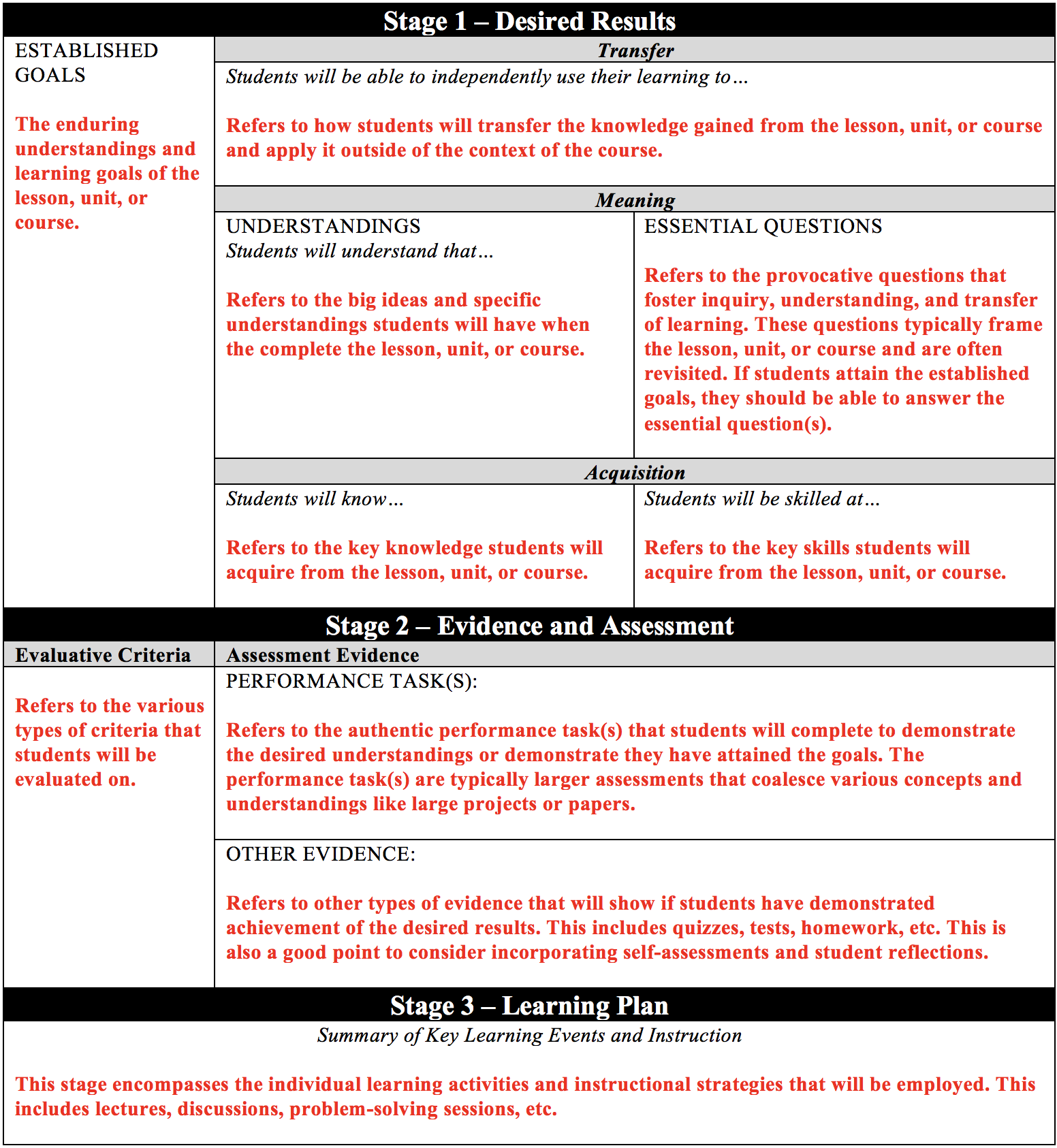
Backward design, also known as Understanding by Design (UbD), is a curriculum planning framework developed by Wiggins and McTighe that starts with desired learning outcomes and works backward to assessments and activities. It emphasises understanding and transfer over surface-level content coverage, and it alignsand it aligns directly with how the Australian Curriculum v9 is structured.
The framework follows three stages. Stage 1: Identify Desired Results. Establishestablish what students should understand, know, and be able to do by the end of the unit, using Achievement Standards as the starting point. Stage 2: Determine Acceptable Evidence. Plan assessmentplan assessment tasks that provide evidence students have achieved Stage 1 goals, including authentic tasks, marking guides, and self-assessments. Stage 3: Plan Learning Experiences. Design sequenceddesign sequenced activities and select Content Descriptors that build toward the assessments.
This sequence (Achievement Standards, then assessments, then Content Descriptors and activities) Achievement Standards, then assessments, then Content Descriptors and activities) ensures tight alignment and avoids the common trap of "textbook coverage" or disconnected lessons. Traditional planning starts with activities or content and adds assessment afterward, which often leads to misalignment between what is taught and what is assessed.
ACARA’s own v9 resources model backward design explicitly. For example, the Years 1–2 Digital Technologies sample task "Stepping Out" targets the Achievement Standard where students "collect data, represent the data as a graph, and interpret it to make decisions." The assessment task has students walk from Point A to Point B, record their steps, produce a graph, and interpret differences (such as stride length). Only then are supporting activities and Content Descriptors identified, like priorlike prior data collection from Mathematics and Science.
The key difference from traditional planning is the starting point. Traditional planning begins with textbooks, activities, or themes. Backward design begins with Achievement Standards. Traditional planning adds assessment after activities, often as low-stakes quizzes. Backward design plans assessment second, as authentic evidence of learning. Traditional planning covers all descriptors upfront. Backward design selects Content Descriptors last, choosing only those that support the assessment.
TeaCheese’s workflow is built on backward design principles. You start by selecting an Achievement Standard (Stage 1), and TeaCheese generates assessment marking guides with A–E descriptors (Stage 2), then produces lesson plans with learning intentions, success criteria, and sequenced activities (Stage 3). The entire process follows the UbD framework, without requiringwithout requiring teachers to manually unpack standards and build resources from scratch.